
The Beauty of Complexity
And the Dangers of Trying Too Hard to Simplify God


In This Episode:
Tomsées (Tom says) in which I follow up on a quandary from last month.*
What Happened Recently at The Row House? A Forum on housing in Lancaster with implications for escaping our current housing trap. 🐁
What’s Next? A fire 🪵 and two events in Tom’tober! (my birthday month)
Tomsées
Last time I didn’t have time to refine my “short take on Christ and culture.” Partly because my wall was dripping with spaghetti (a metaphor for lots of verbiage with little cohesion).
Also, Becky and I were spirited away to Denver on a Southwest plane for a week of grandparent work. It felt a bit like a vacation, though, thanks to the sunshine and the lovely suite in our daughter’s home.
We’re back to regular programming and PA. Sorry if we’re to blame for these dry days. We really were hoping for more humidity than this.

Catching Up
In the previous episode of permeability I posed a view of Christian cultural engagement that rubbed me the wrong way, and I asked you to help me understand my dissonance. I received two bright comments which I’ll include as ingredients in this plate of pasta at the conclusion.
The line being suggested by a professor went something like this:1
Love for God sets the direction for loving neighbor (engaging culture).
These two loves must be aligned correctly in our hearts and minds
Anything less than God as our primary love and reason for doing good is idolatry. Idols would include authentic self, fear of man, recognition, advancement, etc.
Habit and technique (how we engage culture) must be born out of a proper fear and love of God.
Such an approach by believers may overlap our neighbors’ habits and techniques no matter their worldview or religion; conversely, we may also be out of step.
The Christian, going by the compass of Christ, may appear to “worldlings” (the label he used) as someone who is both consonant with prevailing ethics and sometimes way off course, even persecuted for it.
All the habit and technique a person engages is worthless if not oriented toward the love of God, his glory, him as “lodestar;” otherwise, our boat goes in circle (Watson, a Puritan).
He used the example of Christian martyrs under the Roman empire who loved God so much that they rescued babies, wouldn’t bow to Caesar, etc.
Bifurcated Brains
I don’t think any of these statements are entirely off-base in isolation. They’re pretty typical ideas one might hear in popular evangelicalism. I took issue, though, with the overall exhortation, repeated at least four times, that Christians are called to “get the paradigm right.” As if the greatest commandment was to keep the two greatest commandments straight in our heads, never mind “lesser” fish to fry such as affection, obedience, trust, justice, mercy, and humility.
Now, before I seem to slam dunk on intellectual rigor and wise “alignment,” let it be known that I credit a similar workshop for setting me on a path of loving God with my mind. It’s a laughable story now, as you’ll see, but it’s also one that points out the grave danger of living within a paradigm that attempts to take the fullness of Christian experience captive to mere brain waves.
A self-appointed local church planter at Bloomsburg University in the 80’s was a sort of mentor of mine. He taught a seminar to a small group of pimply-faced undergrads that he titled “Biblical Injunctions for Christian Cognition.” Talk about unnecessarily lugubrious nomenclature (sic)!
He could’ve titled it “Loving God with all Your Mind,” but Nnnnoooo.
Anyway, his intent was earnest, and his content was a safe sand bar from which we could approach the rough surf in the sea of state university. Between the waves of emotional sentimentality (much of Evangelicalism), the riptides of wholesale secularism of Academia, and the storm surge of hedonism everywhere, we longed for footing.
That seminar on “cognition” was a beachhead for launching our journey toward intellectual rigor, and it was a temptation to feel smarter than our “less enlightened” Christian peers.

The Push Back
Hence, I’m a bit allergic to presentations of Christian faith that turn nuanced complexity into totalized reduction. At the recent workshop I found myself squirming in, I offered this notion of complexity as a challenge to “God first and nothing else matters.” I tried to commend the beauty of God’s grace in the midst of our mixed motives.
The teacher conceded that we humans are co-mingled with love and sin, but he didn’t elaborate on that. Nor did he give the impression that his reduction was anything short of undeniable.
What’s the Big Deal?
I wrote a few hundred words after that seminar about this juggernaut and a few other things that came up which set me reeling for clarification. Talk to me sometime about it. For now, here’s my simple concern:
For one, pursuing such alignment elevates a cognitive paradigm above other avenues of Christian faithfulness: Matters of the heart leading to trust, love, and demonstrable action (postures which are commended on every page in the Scriptures).
For another, it denigrates “lesser enlightened” Christians and their honest attempts to follow Christ in their context. Good works do not require a pass code. One need not be properly aligned, whatever that means, to run to a smoking vehicle to rescue a fellow traveler in danger.
For a third challenge, let’s consider children, the mentally disabled, and the dying. No painstakingly constructed theological paradigms are required for them to please God and have an impact in our world. In fact, the smartest Christian, perhaps of all time, asserted: “Knowledge puffs up, but love builds up.“2
And it was Jesus, we ought to remember, who said “Let the little children come unto me….”
It’s Worse Than the Problem
In the end, how we view God does affect our actions. But this particular rigid view of God, as I’ve observed in my few years on Earth, creates worse problems than the ones the teacher warned us about but never really specified:3
We have to think our ways out of sin and in to godliness.
We never can be sure we are completely aligned.
We bifurcate love for our personal God from our love for human persons.
We fall for the deception that complicated doctrinal or theological thoughts equate to holiness, mercy, justice, and humility, the very strains that are perennially on God’s heart (Micah 6:8).
We call into question others’ dignity as they engage in genuine love (by faith or in the absence of faith).
We doubt the worth of our own loves if they are co-mingled with other motives such as self interest, fear, or duty. That is, we deny our preciously complex humanity.
We complicate beautiful relationships by trying to turn our relationship with God and others into simple paradigms.
What the Readers Said
Judy makes a good point about how our hearts can easily be puffed up if we detach our loves:
I think there's a reason Jesus gave us a double-barreled commandment: Love God with all you have and are (heart, soul, strength, mind) AND love your neighbor as yourself. He knew that if we only concentrate on the first one, we could become selfish, self-centered, detached from the needs around us, and proud of our own piety and religious practice -- probably exactly what he saw in the rich young man who walked away sorrowful.
Christina addresses the assumption that any human loves that aren’t consciously aligned with reference to God are somehow unreal or useless:
It sounds like it is coming from a…“total depravity” point of view where all human activity that is not undertaken by those “quickened” by the Holy Spirit is basically useless or evil. While it may be that good works are not salvific, there are plenty of scriptures that call humanity to good works. It sounds like a negation of the benefits of common grace in the world, of virtue, whether Christian or not.
I like how each of these responses take human activity seriously without an all-or-nothing reductionism. Even Jesus, when talking about his Father’s mercy in rain and sunshine, acknowledges that all people groups love their own. It’s a real love, even if it’s uncoupled from gratitude to the Creator.
He even refers to non-Jews as “pagans,” playfully and pointedly poking at his fellow Jews’ tendency toward over-righteousness. His call to his own disciples is greater: To be merciful as God is merciful and to love even those who act like our enemies.
This takes trust, not a trick of the mind. It’s a path of wisdom and action, not a mental paradigm. Notice that in all the wisdom literature of Scripture there are no tidy syllogisms.
If there’s an alignment to pursue, it’s to find ourselves moved by gratitude for all of God’s blessings and to turn around in mercy toward others.
Games People Play
Picture the Mouse Trap game or a Rube Goldberg machine. Their conceit is in making a simple yet complex process appear utterly complicated. The reality is, the action (e.g. trapping a rodent) is simple even though involves a dance of complexity including timing, dexterity, and a duped mouse. Making it appear more complicated than necessary is funny. But when we do this in relationships with God or people, we only complicate matters through rigid simplicity.
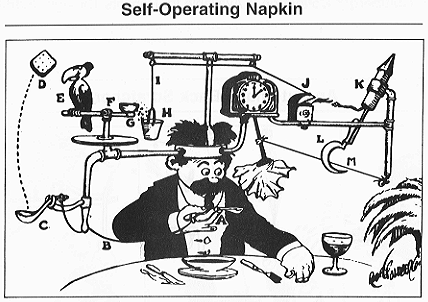
We simply can not, and must not, uncouple love for God from love for neighbor. It’s a holy complexity, but it’s not complicated. I invite you into that lovely dance with joy and abandon. God’s grace can make up for the faults in our loves.
My editor friend gets the last word:
I'm thankful God knows that I am dust and shows me grace in my imperfect attempts to follow Christ.
What Happened?
09/12: Moved by Housing Stories
They Shall Build Houses! with Chad Martin of Chestnut Housing
Sponsored by the Lancaster Good Neighbor Project, a community of young adults aiming at personal transformation and the common good and lead by former board member, Kristen Vieldhouse.


What’s Next at The Row House?

09/26 Fireside Chat with The Good Neighbor Project
Are you in your 20’s or 30’s? Then you’re invited to join me and Kristen Vieldhouse in Lancaster City for a casual discussion around a real fire (weather permitting) on Friday night, 6:00-8:00 PM.
Topic: Living Generously with Our Money & Attention
10/10 Friday Forum with Essayist Catherine Ricketts

Parenting, Creativity, and Calling
@ The Square Halo Gallery | 37 N. Market St. Lancaster, PA 7:00 PM
+ A separate Saturday Writer’s Breakfast at Nooks Books and Gallery, Lancaster at 9:00 AM
Not for women only, her Forum will open up a discussion of the uneasy relationship between care giving and creativity.
Catherine is a mother of three, writer, and lifelong advocate of the arts. She comes to us from Philadelphia.
Our 2nd Second Story: Saturday, 10/18, 4:00-5:00 PM,
For our Sponsors, Members, and their guests only.
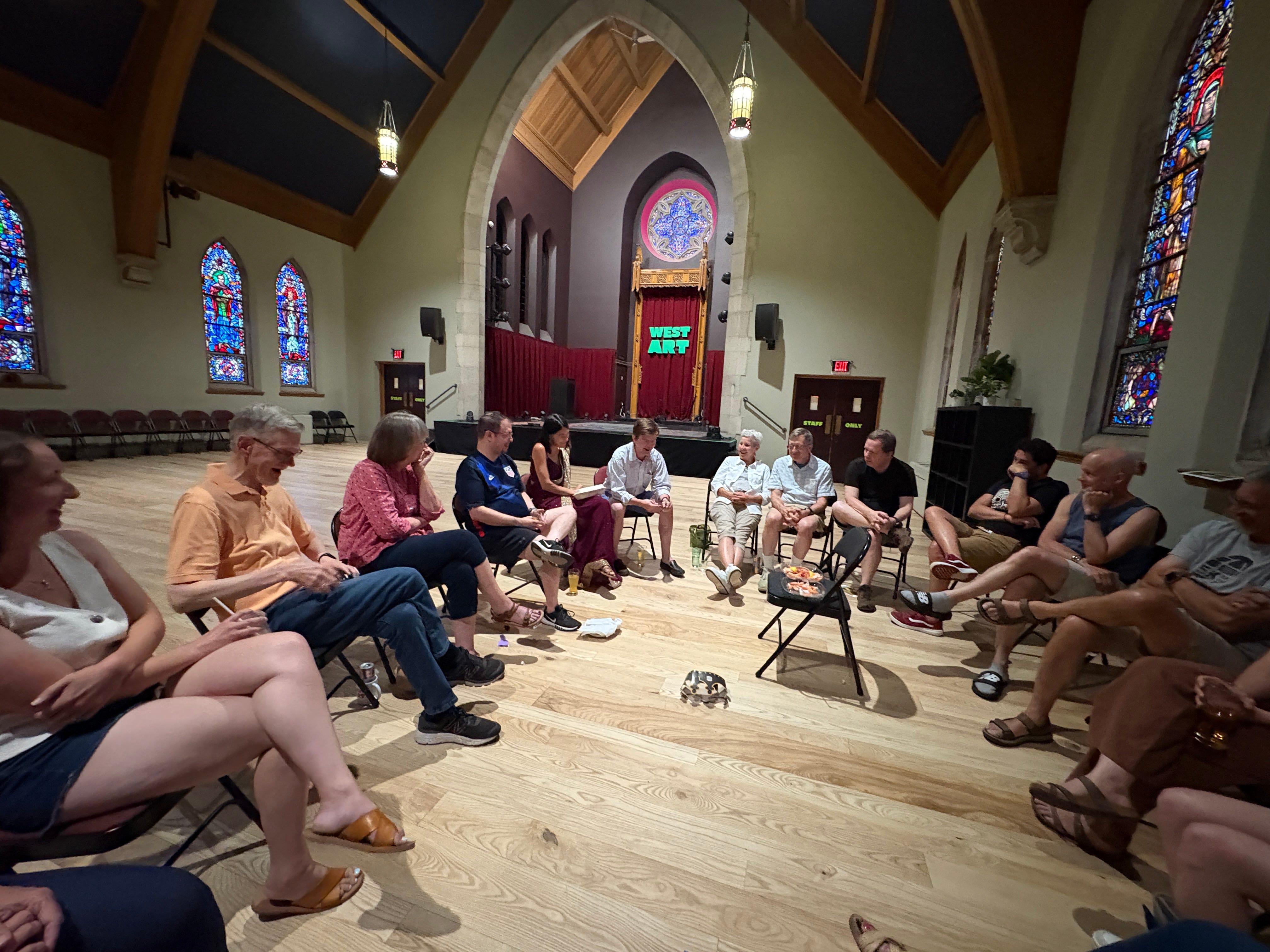
This moderated discussion will take place at The Row House HQ. It’s a chance to enjoy food, drink, and unscripted conversation around one of our recent topics, in this case housing. We’re working on bringing Chad Martin back to go deeper into it with us.
Optional: We walk across the street for more hang time at WestArt where folks can buy a coffee, espresso drink, beer, wine, cocktail, or nonalcoholic beverage.
RSVP by replying to this email, or look out for our next Sponsor & Member newsletter.
Want to attend our Forums with a friend without buying a ticket? Join our growing group of 90 Sponsors and Members! It’s easy. Here’s how:
That’s all for now. Thanks for reading. Don’t forget to ❤️ this column, make a comment, or share this post with a friend. See you soon!
*Tomsées is a nod to Pensées, an eclectic collection of writings by Blaise Pascal which was a work of apologetics for the Christian faith, published posthumously in 1670.
These points are a more detailed account than the paragraph I wrote last time and were written mere hours after the workshop (It stirred me up that much!).
The Apostle Paul in I Corinthians 8:1.
If your “alignment” isn’t right, what’s the worst that can happen? Doctrinal infidelity, random violence, drug addiction, impoliteness, nihilism? He didn’t say, but still the audience nodded along. I wanted more details, outcomes, something besides an elusive mental construct.
Growing up, the model of Christian conversion was posited as something like: believe—> behave—> belong.
Nowadays, at least in college ministry, non Christians often start out with belong, then they ‘behave’ as they try stuff out, and then many eventually believe!
From political science it’s clear to me that most people’s beliefs are not well reasoned or thought out. They’re typically just a reflection of the community they’re hanging out in (for better or worse). Maybe that’s why Jesus made it a point to befriend so many sinners?
Anyway just my two cents :)